


'A Special Place'
About Pieve a Castello
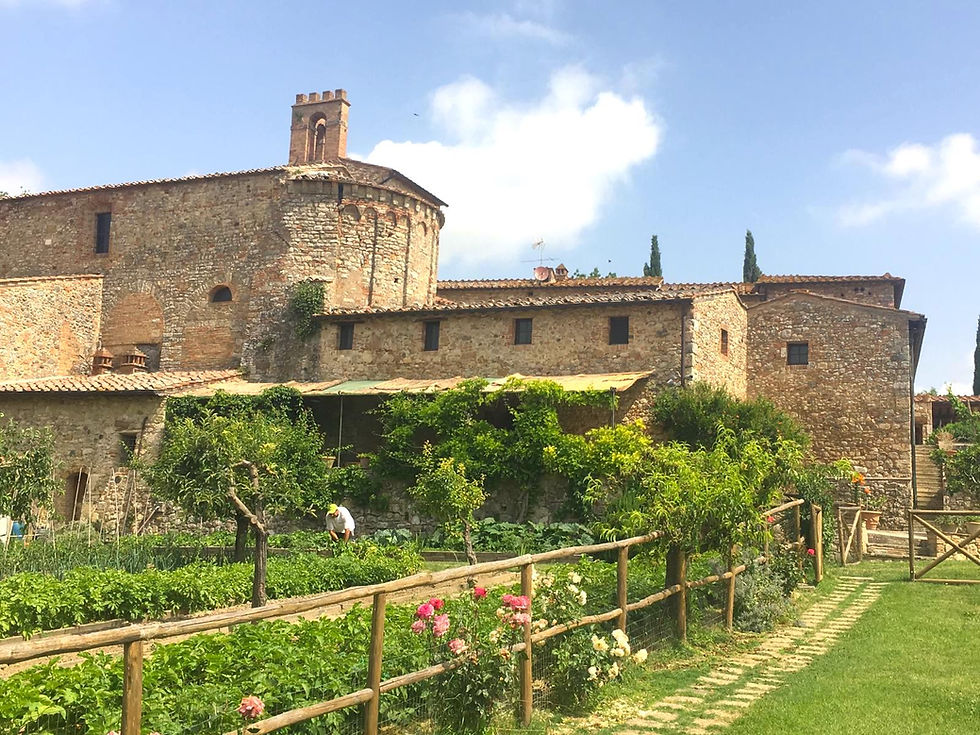
Tucked into the wooded hills between Siena and Florence, Pieve a Castello is one of the oldest and most perfectly preserved early medieval buildings in Europe. This extraordinary complex - a Romanesque canonry with origins dating back to the 8th century - has been lovingly restored as an exclusive place of retreat, reflection, and cultural exploration.
Surrounded by vineyards, olive groves, and the quiet echoes of the Via Francigena, Pieve a Castello is not only a place to stay - it is a place to connect: with history, with landscape, with art, and with the enduring spirit of Tuscany. From the warmth of its solar-assisted underfloor heating to the gentle toll of its ancient bell, everything about this site speaks of timeless continuity and thoughtful renewal.

A Walk Through Time:
Pieve a Castello's History
To truly appreciate the character of Pieve a Castello, one must step back through the centuries. What follows is a brief historical timeline, tracing the remarkable story of this site - from its early spiritual roots to its present-day role as a haven for learning and cultural enrichment.






500 BC
Etruscan Foundations
An early Etruscan settlement, with a temple of imported granite, marks the beginning of habitation on the site. Alabaster artifacts confirm its ancient importance.
260 BC
Roman Arrival
Rome annexes Volterra. 'A Castello' becomes a Roman castrum, built around a courtyard; an Etruscan hearth stone still lies there today.
568-9 AD
Longobards Transform Italy
The Longobards cross into Italy and reshape the landscape. 'A Castello' evolves under their influence, gaining strength and religious significance.
5th-6th C AD
Turmoil and Fortification
With Rome’s fall, Ostrogoths and Franks occupy the area. 'A Castello' grows into a fortified borgo, providing refuge and services for travelers along ancient trade routes.
700-740 AD
Canonry is Born
Under Longobard rule, 'a Castello' becomes an Augustinian Canonry. A large proto-Romanesque church and rare octagonal baptistery are constructed.
990 AD
The Pilgrims’ Road
Archbishop Sigeric documents the Via Francigena. 'A Castello' stands as the major ecclesiastical stop between Siena and San Gimignano, hosting countless pilgrims.
1200 AD
Peak Medieval Prosperity
With 180 inhabitants, 'a Castello' thrives. Its 22 dependent churches serve travellers, the sick, and the poor, helping maintain crucial medieval routes.
1943-45
War Refuge
During WWII, 'a Castello' shelters about 60 people fleeing conflict, a quiet bastion once more.
1400-1401
Destruction and Decline
Florentine forces sack 'a Castello'. The community flees. Lands are seized; 'a Castello' is reduced to a simple parish church and farmstead.
1348
Black Death Strikes
The Plague devastates Siena and surrounding lands. 'A Castello' and its networks suffer heavy losses, marking the end of an era of prosperity.
1750-1900
Quiet Centuries
Tenant farmers like the Uzielli family work the land. By 1900, only 66 people remain at Pieve a Castello, living a simple, isolated life.
1955
Abandonment
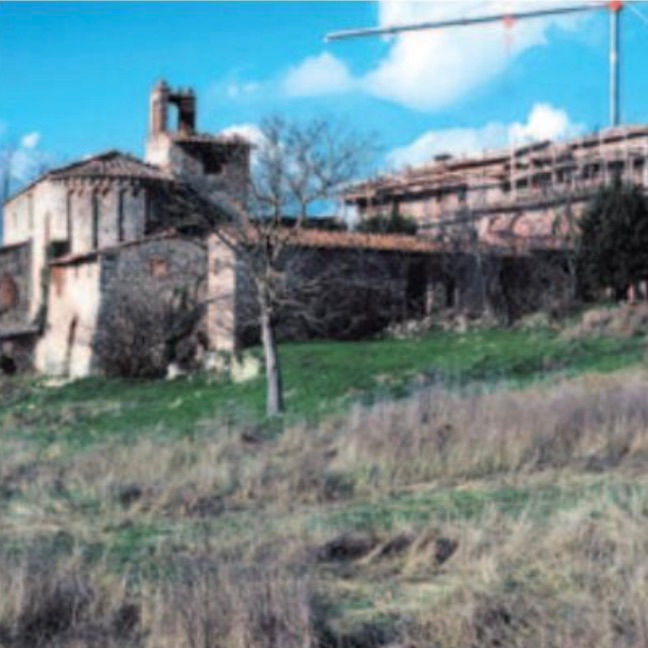
The last priest departs. The ancient buildings fall into decay, battered by time but structurally intact thanks to centuries of sturdy construction.
1986
Rescue Mission Begins
Christopher Whinney purchases the derelict Pieve a Castello, beginning years of careful restoration under strict heritage laws.
2002
Triumph of Restoration
Pieve a Castello's restoration is completed, winning the prestigious ‘World Legacy Award’ for Heritage Tourism. Once more, it opens its doors to travelers.
Present Day
A Living History
Still offering hospitality after 1,300 years, Pieve a Castello stands preserved - a rare living link to Europe’s ancient, medieval, and modern past.

We look forward to welcoming you!
A relaxed ‘house party’ style is consistent across the itineraries based at Pieve a Castello, which is also available to host private groups.
Escorted Tours and Private Stays at Pieve a Castello are booked through its sister company Alternative Travel Group T/A ATG Oxford. For an overview of the Tours offered.

Stay well-informed
Subscribe to the Pieve a Castello mailing list, run in partnership with ATG, to receive updates on events, news and things to do.